


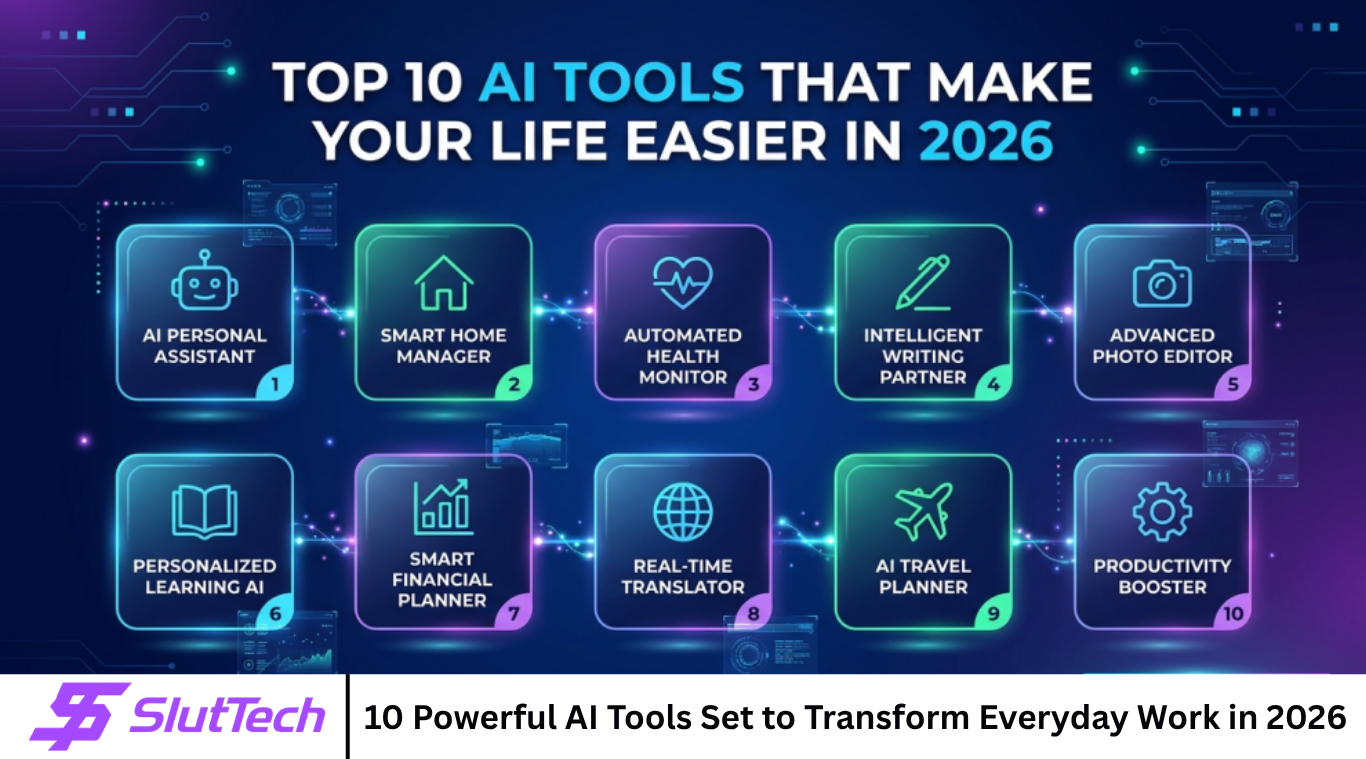
Artificial intelligence has become an essential part of modern work, helping individuals and businesses complete tasks faster, improve productivity, and automate repetitive processes. In 2026, AI-powered tools are becoming more advanced, offering solutions for writing, design, communication, data analysis, project management, and creative work.
From professionals and entrepreneurs to students and organizations, more people are adopting AI tools to save time and improve efficiency. These technologies are not only changing how people work but also creating new opportunities for innovation and collaboration.
Why AI Tools Are Becoming Essential
The modern workplace requires speed, accuracy, and the ability to manage large amounts of information. AI tools help users organize tasks, generate ideas, analyze data, and automate workflows that previously required significant manual effort.
By reducing repetitive work, AI allows people to focus on strategic thinking, creativity, and problem-solving.
1. AI Writing and Content Creation Tools
AI writing tools have transformed the way people create content. These platforms help users generate articles, emails, reports, social media posts, and marketing materials more efficiently.
Professionals can use AI writing assistants to improve grammar, develop ideas, summarize information, and create high-quality drafts while maintaining their own creative input.
2. AI Design and Image Creation Tools
AI-powered design tools are making visual content creation faster and more accessible. Users can generate graphics, presentations, illustrations, and marketing visuals without requiring advanced design skills.
These tools help businesses create professional-looking content while reducing production time.
3. AI Coding Assistants
AI coding tools are becoming valuable resources for developers and technology teams. They can suggest code, identify errors, explain programming concepts, and automate repetitive development tasks.
By assisting programmers, AI helps speed up software development and improves productivity.
4. AI Productivity Assistants
AI productivity tools help users manage schedules, organize information, create task lists, and automate daily workflows. These assistants can improve time management and help professionals stay focused on important responsibilities.
Businesses are using these tools to improve collaboration and workplace efficiency.
5. AI Data Analysis Tools
Data analysis has become easier with AI-powered solutions that can process large amounts of information and identify useful insights. Businesses use AI analytics tools to understand customer behavior, track performance, and make better decisions.
These tools help organizations turn complex data into actionable strategies.
6. AI Customer Support Solutions
AI-powered customer service tools are changing how companies communicate with customers. Chatbots and virtual assistants can answer common questions, provide instant support, and improve response times.
Businesses benefit from faster service while customers receive more convenient support experiences.
7. AI Translation and Communication Tools
AI translation tools are helping people communicate across different languages and regions. Advanced systems can translate text, improve communication, and support global collaboration.
These technologies are especially useful for international businesses and remote teams.
8. AI Video and Audio Creation Tools
AI video and audio tools are simplifying content production by helping users create videos, edit recordings, generate voiceovers, and improve media quality.
Creators, marketers, and businesses can produce professional content more efficiently with AI assistance.
9. AI Research and Information Tools
AI research tools help users find information, summarize documents, analyze topics, and organize knowledge. These platforms save time by quickly processing large amounts of information.
Students, researchers, and professionals use AI tools to improve learning and decision-making.
10. AI Business Automation Tools
AI automation platforms help businesses streamline operations by connecting different systems, managing workflows, and reducing manual tasks.
From marketing automation to administrative processes, these tools improve efficiency and allow companies to focus on growth.
Benefits of Using AI Tools
AI tools provide several advantages, including increased productivity, faster task completion, improved accuracy, reduced operational costs, and enhanced creativity.
When used correctly, AI acts as a powerful assistant that helps individuals and businesses achieve better results.
Challenges of AI Adoption
Despite their benefits, AI tools also present challenges. Users must consider data privacy, security, accuracy, and responsible usage. AI-generated results should always be reviewed to ensure quality and reliability.
Organizations should provide proper training and establish guidelines for effective AI implementation.
The Future of AI-Powered Work
AI technology will continue evolving, bringing more advanced automation, smarter assistants, and improved collaboration between humans and machines. Future AI tools are expected to become more personalized, efficient, and integrated into everyday workflows.
Professionals who learn how to use AI effectively will have greater opportunities to improve productivity and adapt to the changing workplace.
Frequently Asked Questions
Why are AI tools important in 2026?
AI tools help people automate tasks, improve productivity, save time, and enhance creativity across different industries.
Can AI tools replace human workers?
AI tools are designed to assist people by improving efficiency. Human creativity, decision-making, and problem-solving skills remain essential.
Which industries benefit from AI tools?
Almost every industry can benefit from AI, including technology, marketing, education, healthcare, finance, design, and business operations.
Are AI tools difficult to use?
Many modern AI tools are designed with simple interfaces, making them accessible even for users without technical experience.
What should businesses consider before using AI tools?
Businesses should evaluate security, privacy, accuracy, costs, and employee training before implementing AI solutions.
Conclusion
AI tools are transforming everyday work by making tasks faster, smarter, and more efficient. From content creation and design to automation and data analysis, these technologies are helping individuals and businesses improve productivity in 2026. While AI should be used responsibly, its ability to support creativity, decision-making, and innovation makes it one of the most valuable technologies shaping the future of work.