


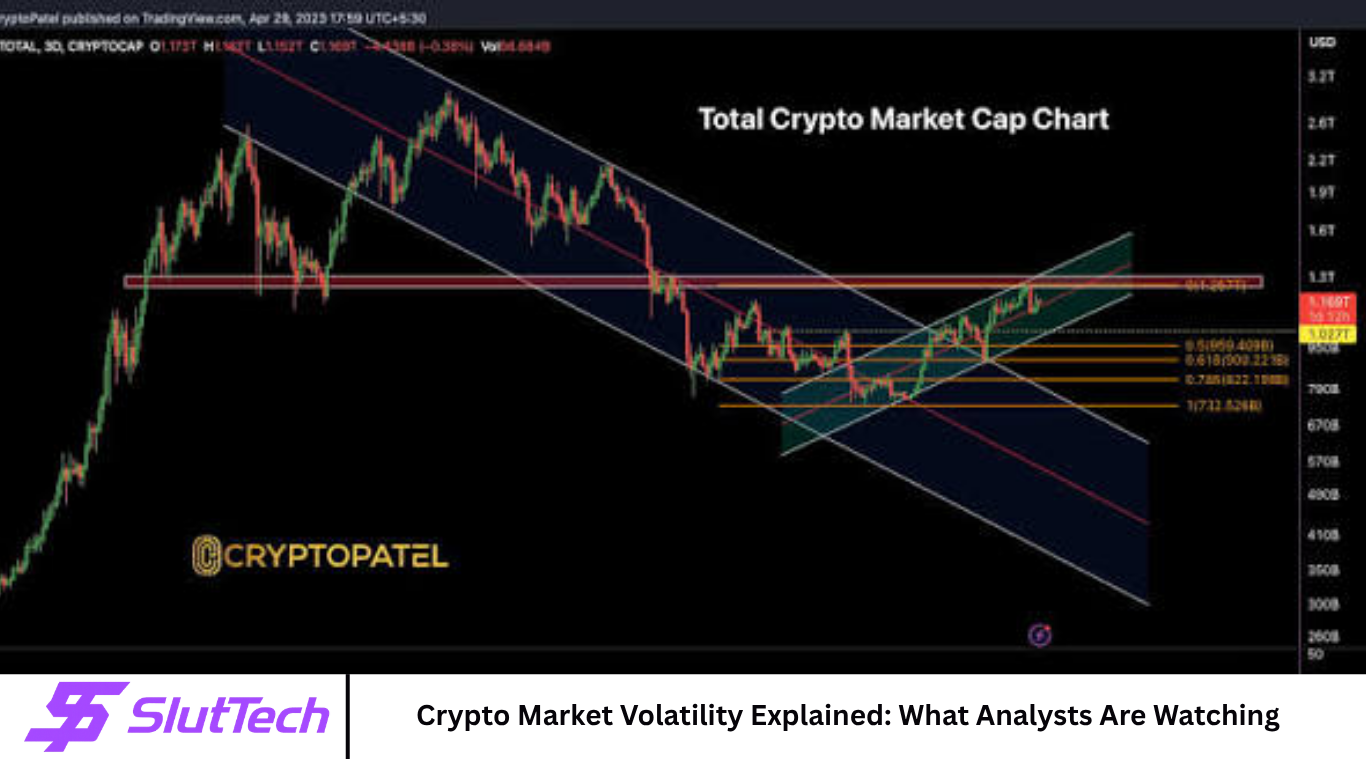
The cryptocurrency market is known for its rapid price movements, changing investor sentiment, and constant innovation. While some periods bring strong growth and increased interest, others create uncertainty as prices experience significant fluctuations.
Analysts closely monitor market trends, economic conditions, regulations, technology developments, and investor behavior to understand what is driving crypto market movements.
Understanding Crypto Market Volatility
Crypto market volatility refers to the frequent and sometimes dramatic changes in digital asset prices. Unlike traditional financial markets, cryptocurrencies often experience faster price shifts due to factors such as market demand, investor activity, news events, and changing regulations.
Volatility can create opportunities but also increases the importance of research and careful decision-making.
Factors Driving Cryptocurrency Price Changes
Several factors influence cryptocurrency prices, including supply and demand, market confidence, global economic conditions, and technological developments.
Positive news, increased adoption, or new innovations can boost interest, while regulatory concerns or market uncertainty may affect investor confidence.
The Role of Investor Sentiment
Investor emotions play a major role in crypto market movements. Optimism can increase buying activity, while fear and uncertainty may lead to selling pressure.
Analysts often study market behavior and trading patterns to understand how sentiment influences price trends.
Impact of Global Economic Conditions
Cryptocurrency markets are increasingly connected to broader financial conditions. Interest rates, inflation, currency movements, and economic policies can influence investor decisions.
Changes in global markets may affect how people view digital assets as part of their investment strategies.
Regulatory Developments and Their Effects
Government regulations continue shaping the future of cryptocurrency markets. New rules related to digital assets, exchanges, taxation, and consumer protection can influence market confidence.
Clear regulations may support wider adoption, while uncertainty can create short-term market reactions.
Institutional Interest in Crypto
Large financial institutions and businesses have shown increasing interest in digital assets and blockchain technology.
Institutional participation can influence market growth, liquidity, and public confidence in cryptocurrencies.
Blockchain Technology and Future Innovation
Blockchain remains the foundation of cryptocurrency technology. Developers continue exploring new applications, including digital payments, decentralized systems, and improved financial solutions.
Technological improvements may play an important role in the long-term development of the crypto industry.
Common Reasons Behind Market Corrections
Market corrections are normal in many financial markets, including cryptocurrencies. They can occur due to profit-taking, changing expectations, economic concerns, or shifts in investor behavior.
Analysts often view corrections as part of market cycles rather than automatically as signs of long-term decline.
Risks and Challenges in Crypto Markets
Cryptocurrency investing involves risks such as high volatility, regulatory uncertainty, cybersecurity threats, and market unpredictability.
Understanding these risks and maintaining realistic expectations are important for anyone following digital asset markets.
The Future of Cryptocurrency Markets
The future of crypto markets will likely depend on adoption, technological progress, regulatory developments, and broader economic conditions.
As the industry continues evolving, digital assets may remain an important area of discussion in global finance.
Frequently Asked Questions
Why is the crypto market so volatile?
Cryptocurrency prices can change quickly due to investor sentiment, market demand, regulations, and global economic factors.
Is a crypto decline always a crash?
Not necessarily. Some price declines are normal market corrections that occur during regular market cycles.
What factors affect crypto prices?
Supply and demand, regulations, technology, economic conditions, and investor behavior all influence cryptocurrency prices.
Why do analysts study crypto trends?
Analysts examine market data and developments to better understand price movements and potential future conditions.
What is the future of cryptocurrency?
The future of cryptocurrency will depend on innovation, adoption, regulation, and how the market continues to develop.
Conclusion
Crypto market volatility remains a defining feature of digital assets, influenced by economic conditions, investor behavior, regulations, and technological progress. Analysts continue monitoring these factors to understand market movements and identify long-term trends. As cryptocurrency adoption grows, understanding the forces behind market changes will remain important for following the future of digital finance.
